
The Evolution of Gunjur Sports under two young Administrators: From Stability to Transformation

Gunjur has long been a powerhouse of Nawettan football, producing generations of talented players, some of whom have gone on to represent The Gambia. For decades, local tournaments have been sustained by committed volunteer sports administrators, who have continuously passed the baton from one generation to the next, ensuring that football remains at the heart of this vibrant coastal community.
These pioneers laid a resilient foundation under often challenging conditions. Today, that legacy is being redefined through a new wave of leadership, marking a journey shaped by stability, transition, and renewed ambition.
In recent years, sports development in Gunjur has evolved through two distinct, yet interconnected eras: the consolidation phase under Dembo F. Touray and the transformative leadership of Lamin Bada Bojang. Together, they tell a compelling story of continuity and progress - evident in the recently concluded Summer Nawettan season and the electrifying final between Red Star FC and Sporting General FA.

The evolution of Gunjur sports in recent years reflects more than just administrative change, it signals a shift in philosophy. Under Dembo F. Touray, the priority was stability: organising competitions consistently, strengthening governance, and ensuring that football and other forms of sport endured despite infrastructural and financial limitations. That era provided the discipline and structure that kept the system alive.
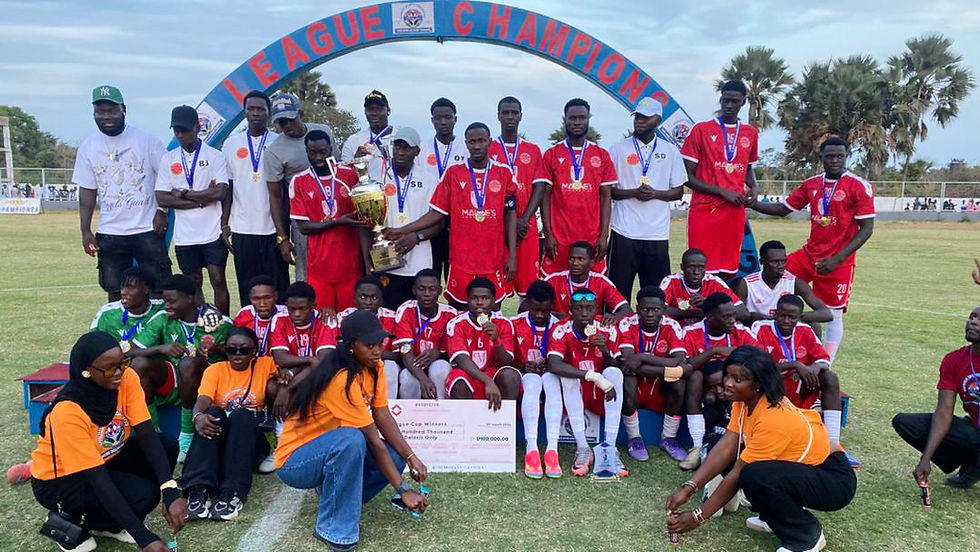
Today, under Lamin Bada Bojang, the focus has moved beyond continuity toward transformation. Competitions are no longer simply staged, they are being elevated. The improved organisation of major finals, enhanced matchday presentation, and record prize incentives all point to a deliberate effort to professionalise the Nawettan experience.
Yet, beyond the spectacle lies a more important shift: the recognition that sustainable sports development requires systems, not just tournaments. Grassroots structures, youth pathways, and merit-based approaches are now entering the conversation, suggesting a long-term vision that extends beyond seasonal competition.
However, this moment also presents a test. Raising standards brings higher expectations - from players, supporters, sponsors, and the wider community. Infrastructure must improve, governance must remain transparent, and the momentum must be sustained beyond headline events.
The transition from Touray’s stabilising leadership to Bojang’s reform-driven approach illustrates a rare continuity in local sports administration, where one era secures the foundation and the next dares to build upon it.
Building upon the previous Foundation: The Touray Era (Up to 2025)
Building on the groundwork of earlier administrations, particularly under Lamin Darboe C., Dembo F. Touray’s leadership prioritised structure, consistency, advocacy and wider sports offering in Gunjur.
During his tenure, Nawettan competitions were organised with regularity, ensuring continuity and sustaining community engagement. Governance systems were strengthened through congresses and inclusive stakeholder participation, helping to stabilise the administrative framework of the Gunjur Sports Committee (GSC).
A defining achievement of this period was the successful transition of football activities to the Nyamina Mini Stadium, following its construction by the Gambia Football Federation (GFF). Despite infrastructural challenges, this move provided a more permanent and organised venue for competitions.
Touray’s administration also invested in capacity building, particularly through the training of local coaches, an effort aimed at improving team management and raising the overall standard of play. Beyond football, his tenure saw Gunjur achieve success in regional competitions and marked the introduction of beach football and basketball within the community.
Ultimately, the Touray era was one of stability; keeping the game alive, structured, and steadily progressing.
A Turning Point: Leadership Transition in 2025
By 2025, there was a growing sense that Gunjur sports needed a new direction, one that would build on existing stability while embracing modern approaches to sports development.
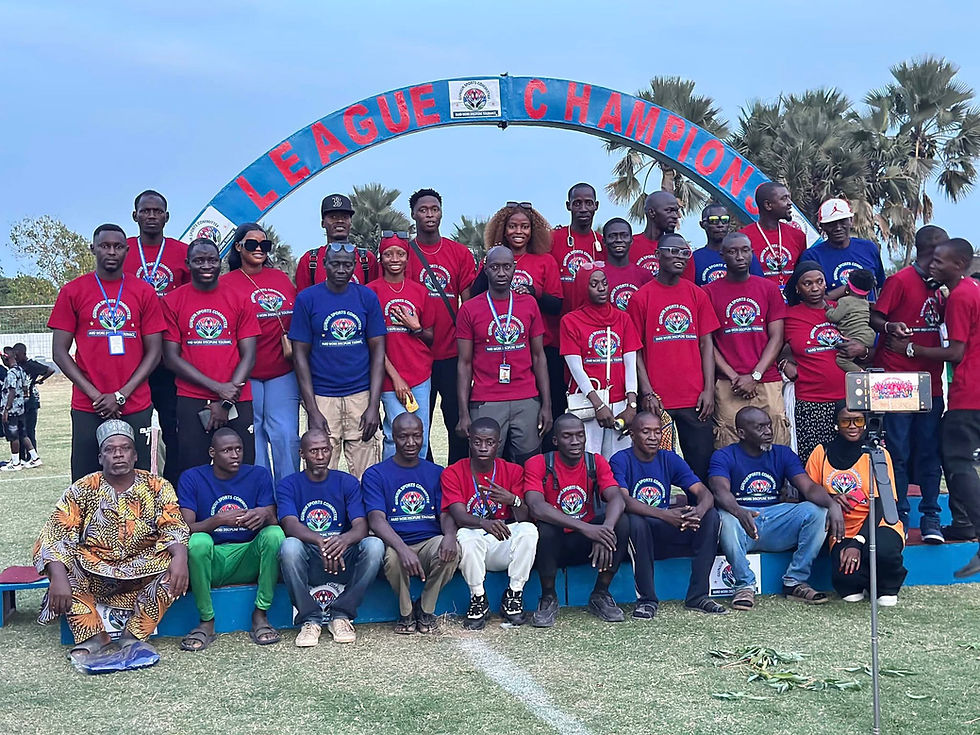
Following a well publised pre-election campaign and a keenly contested congress, Lamin Bada Bojang emerged with a forward-looking vision centred on modernisation, youth development, and strategic partnerships. His election marked the beginning of what he describes as a “new era of sports development” in Gunjur.
The Bojang Era: Raising the Standard
Under Lamin Bada Bojang, the GSC has shifted from simply organising competitions to enhancing the entire sporting ecosystem.
1. Professional Organisation of Competitions
One of the most visible transformations has been the professional staging of major finals.
The 2025 Super Cup and the 2025/2026 Nawettan League Final stand out as defining moments, not only for their competitiveness but also for their organisation. These events featured improved venue preparation, structured kickoff schedules, enhanced security, and a more polished presentation of trophies and prizes.

Notably, the introduction of record prize incentives, including historic cash rewards, has elevated the prestige of local competitions. The decoration of the Nyamina Mini Stadium and effective community mobilisation further transformed matchdays into major social events, boosting attendance, excitement, and overall visibility.
2. From Participation to Structured Development
Beyond matchday success, the Bojang administration is focused on long-term impact.
Efforts are being made to strengthen grassroots systems, create clearer pathways for young talents, and promote merit-based selection and coaching structures. This represents a strategic shift from simply organising tournaments to building a sustainable development model for athletes.
3. Infrastructure and Facilities Drive
Recognising past limitations, the current leadership has placed renewed emphasis on improving sporting facilities. While progress remains ongoing, there is now a clearer vision of transforming the Nyamina Mini Stadium into a standard venue capable of hosting high-level competitions.
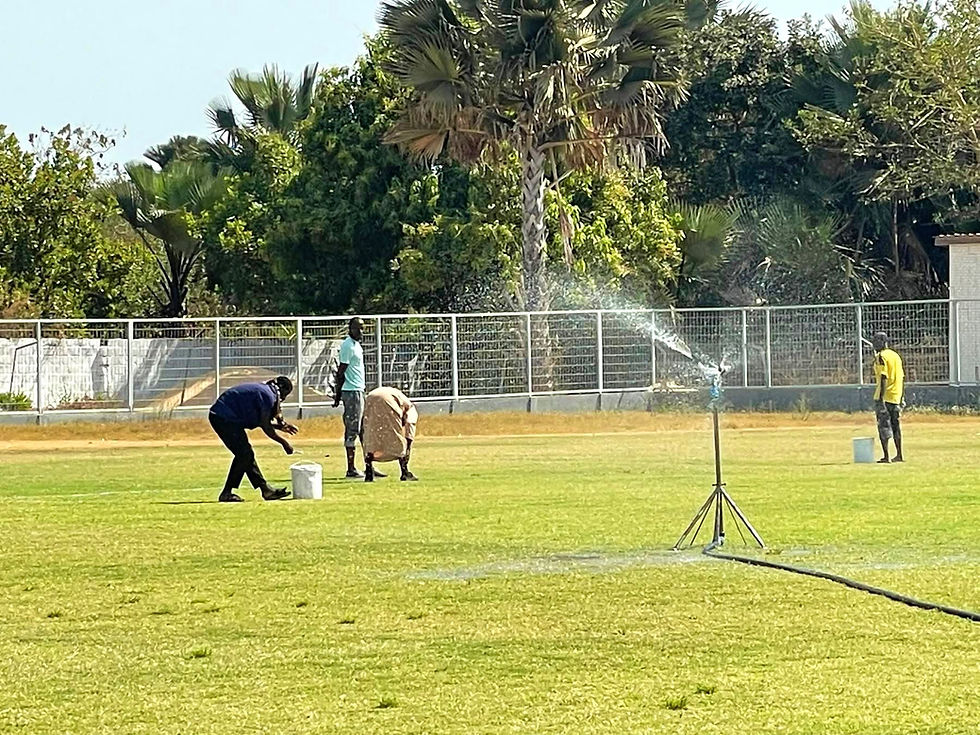
New and improved sprinkler system for the Nyamina football pitch

The Nyamina mini stadium now has improved pitch irrigation system to maintain and improve playing surface.
4. Partnerships and Community Engagement
Another defining feature of this era is the drive to continue attracting sponsorship and partnerships. Increased sponsor involvement in competitions reflects growing confidence in the GSC’s management.
At the same time, community engagement, both locally and within the diaspora has strengthened, making Gunjur sports development a collective effort.
5. Transparency and Modern Governance
Bojang’s leadership has also prioritised transparency, inclusiveness, and effective communication. These principles have helped rebuild trust among stakeholders and foster a more unified approach to sports administration in Gunjur.
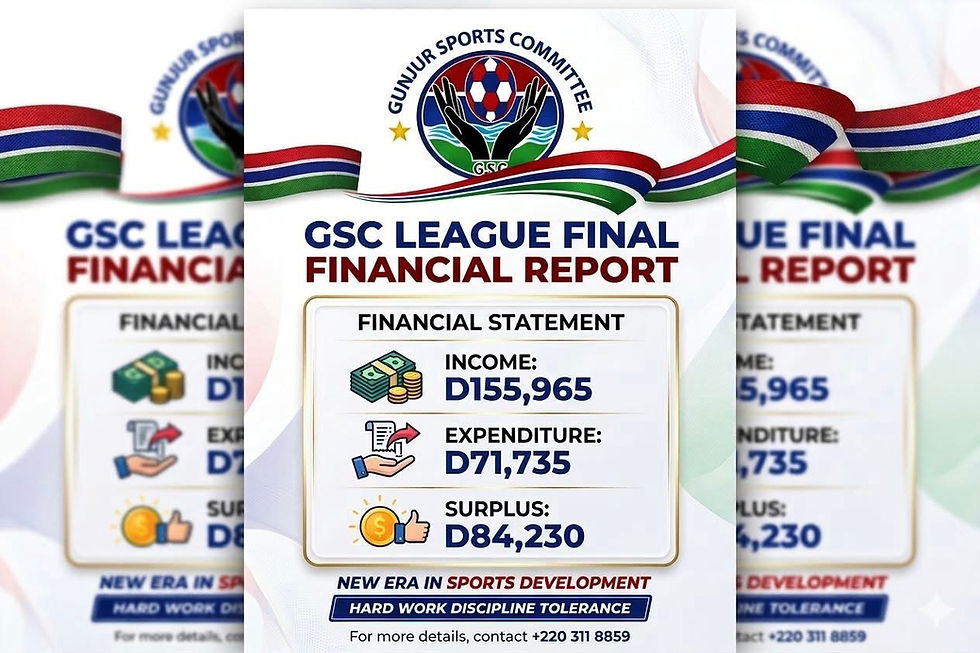
Continuity and Contrast: Two Eras, One Vision
While distinct in approach, both administrations share a common objective: the growth and sustainability of sports in Gunjur.
Dembo F. Touray’s tenure provided the stability, structure, and continuity necessary to sustain competitions.
Lamin Bada Bojang’s leadership is now building on that foundation, introducing innovation, professionalism, and a broader development agenda.
A Future Taking Shape
The evolution of sports in Gunjur is an ongoing story, but one that is clearly gaining momentum.
With improved organisation, elevated competition standards, and a forward-looking development vision, the “new era of sports development ” under Lamin Bada Bojang is already making a visible impact.
Gunjur sports stands at a defining moment. The progress made is visible, the ambition is clear, and the direction is promising.
But the true measure of this “new era of sports development” will not lie in well-organised finals alone, it will depend on whether these gains can be institutionalised, sustained, and expanded.
For the first time in years, Gunjur is not just playing the game, it is positioning itself to lead it.
Editors note:
The author, Lamin Jammeh is a former Sports Administrator in Gunjur, Kombo South District & West Coast Region Sports Committes in mid 1990s.


Comments