
Opinion: Tambadou Wants the Article Deleted. Communities Need It to Stay.

By Dave Manneh Securing Futures: Land Rights Action Collaborative (SFLRAC)
One year ago, I wrote "Beyond Jammeh's Shadow: Elite Capture, Land Dispossession, and State Assets Underselling in the Supposed New Gambia." That piece argued that Mustapha K. Darboe's investigation in The Republic exposed more than a scandal over stolen luxury goods. It mapped a system that moves public and communal wealth into the hands of a connected elite, the same elite that flourished under Yahya Jammeh.
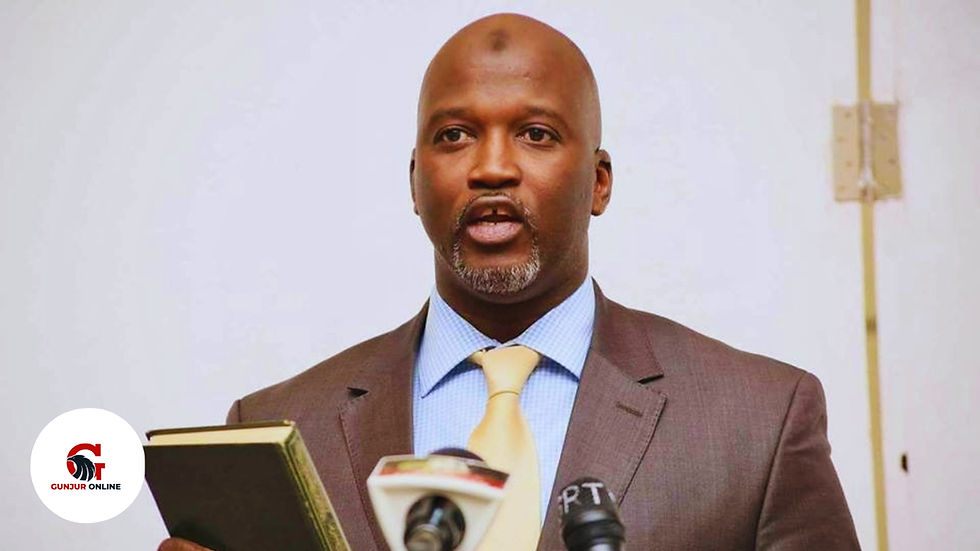
Now that elite answers back. Former Attorney General Abubacarr M. Tambadou has issued a public ultimatum. He demands that Darboe apologise, retract, and delete or edit the original article across every platform. He labels the work defamation. I read it as an attempt to erase evidence. Having spent years documenting land dispossession, I recognise the move. When powerful men demand deletion, they shield a system.
Tambadou recasts a public question as a private wound.
Read the open letter for its method. It builds liability paragraph on paragraph, allows the reader no pause, and binds personal betrayal to every factual rebuttal. Caesar and Brutus arrive beside the Anti-Money Laundering Act. A father's grief stands next to the Public Finance Act. The construction serves one end: shrink a question about land, public assets, and accountability into the story of one man's damaged name, then try the whole matter on that smaller ground.

I decline that ground. Darboe's investigation asked a single question. Did communal land and state wealth pass to a connected few through processes that wore lawful forms while betraying their purpose? That question stands whatever Tambadou's character. A taskforce vote or a lawful-looking signature answers neither the dispossessed clan in Brufut nor the victims still waiting on reparations. Hold the question at its true consequence, and the demand to delete the article reveals its function: closing the public's access to the evidence.
The Republic's record now carries official weight
The Republic documented named properties, valuations, sale prices, buyers, and the closed processes that let assets worth roughly 362 million dollars sell for about 23.7 million, a recovery rate below seven percent. Those are factual claims with figures and dates attached. On 10 March 2026 a National Assembly Special Select Committee released a 324-page report on the disposal of Jammeh-linked state assets. It recommended that the police, under the Director of Public Prosecutions, investigate Tambadou over alleged violations of the Public Finance Act 2014, abuse of office, and economic crimes. A recommendation opens an investigation. The allegations stay allegations until a court rules. But an official parliamentary body judged the matter grave enough to call for prosecution, and that judgement vindicates the public interest The Republic served.
Tambadou disputes the framing. He insists the decisions were collective and lawful. That argument deserves a hearing. Defamation, though, demands proof of malice or knowing falsehood, and a disagreement over framing falls far short of that bar. The remedy for contested framing runs through reply and correction, both of which stay open to him. He has used reply already; his rejoinder sits on the public record beside the article.
Land sits at the centre of this fight
In the 2025 piece I tied the Jammeh asset scandal to the dispossession cases SFLRAC tracks. The logic that undersold state assets to insiders is the logic that stripped communities of land their families had held for generations, with developers such as Mustapha Taf Njie among the beneficiaries.
Tambadou's letter waves away The Republic's land reporting as unsubstantiated claims from unnamed sources. Yet the Ministerial Taskforce he chaired took decisions over land that reached families who have received nothing. When he demands removal or editing of the article, he reaches past personal defence. He asks the public to forget those transactions and to surrender the paper trail that lets communities trace them.
The post-Jammeh order extends the old pattern
My earlier essay argued that the new Gambia carries the old one inside it. Elite capture changed its costume. Under Jammeh, land and assets moved through force. Under Barrow and his ministers, the same transfers travel through legal frameworks, Cabinet approvals, and taskforce decisions. Tambadou's letter performs that newer style with skill. He reframes every documented action as a collective decision and rests on the lawfulness of the process.
Lawfulness marks a floor; justice asks more. A process can satisfy every statute and still deliver an unjust outcome. The Republic showed one Fajara property valued at 8.5 million dalasi resold for 3.15 million, barely 150,000 above the price Jammeh paid fifteen years earlier. Justice Saho-Ceesay named the danger in 2018 when she called the premature disposal of Jammeh's assets a travesty, and Justice Jaiteh later acknowledged that the ministry's route around her ruling amounted to an abuse of process. When a taskforce of insiders approves the sale of public assets to other insiders at undervalued prices, the form holds while the purpose collapses.
Erasure would set a precedent against every dispossessed community
Let me be blunt as someone who works with families who have lost ancestral land. An investigative article about a questionable transaction becomes a tool for accountability. Families cite it and lawyers build cases on it. Researchers trace the pattern across decades and districts. Remove one such article on the demand of an aggrieved official, and you license the next demand. A developer who took land finds the report that documents it and presses for its removal. A minister who undersold a state property points to the Tambadou example to lean on an editor. The public record thins until it holds only what the powerful permit.
That tactic carries a precise name: censorship by litigation threat. Its function is to dismantle the evidence base that ordinary Gambians rely on to reclaim what they lost.
A proportionate remedy stays open to him
Journalists must correct genuine errors. Where a specific fact is shown false, an editor should append a correction; that is ordinary practice. Tambadou asks for something more: a public apology across multiple broadcasters, removal of the article, and the power to edit its content. He frames a threat as a request. If he believes the article defames him, the courtroom stands open. Let a judge weigh the evidence under oath and let Darboe defend his sources and method. Democracies resolve such disputes in a courtroom. His ultimatum bypasses the courtroom for a deadline.
The record must hold
I did not endorse every line of The Republic investigation. I defended its right to exist a year ago, and I defend it now. The article reaches past Abubacarr Tambadou. It documents a system of elite capture that keeps dispossessing ordinary Gambians of land and the security it carries. The graver wrong would let one man's grievance become a weapon against the public's memory. The article must stay. The record must remain. Those of us who fight for land rights will keep using every lawful instrument, investigative journalism among them, to hold the powerful to account.
Readers who value that record can act. Share the investigative piece. Write to the Gambia Press Union and the National Media Council and ask them to resist any move to force its deletion. And if elite capture has cost you land or property, document it and bring it to SFLRAC, so the record grows rather than shrinks. Let Tambadou go to court if he wishes. Let him not silence the page.
-----------------------------------------------------------------------------------------------------------------------------------------------------
Editor’s note: Dave Manneh is the Founder and Research Lead of Securing Futures: Land Rights Action Collaborative (SFLRAC), a registered think tank working with Kombo's dispossessed land-owning communities. This piece builds on his earlier article "Beyond Jammeh's Shadow," published in May 2025.
The opinions expressed here belong to the author and may not reflect the perspectives of Gunjuronline.com.
Have an opinion piece you'd like to publish? Email it to editor@gunjuronline.com
Do you have a story or an opinion piece you’d like to share?
Get in touch by contacting us at: editor@gunjuronline.com
Share your views on this article in the comments below.


Comments