
𝐎𝐩-𝐄𝐝: 𝐓𝐡𝐞 𝐏𝐫𝐢𝐜𝐞 𝐏𝐚𝐢𝐝 𝐁𝐞𝐲𝐨𝐧𝐝 𝐭𝐡𝐞 𝐏𝐥𝐚𝐭𝐞

𝑯𝒐𝒘 𝒇𝒊𝒔𝒉𝒎𝒆𝒂𝒍 𝒉𝒆𝒍𝒑𝒔 𝒑𝒐𝒘𝒆𝒓 𝒕𝒉𝒆 𝒈𝒍𝒐𝒃𝒂𝒍 𝒂𝒒𝒖𝒂𝒄𝒖𝒍𝒕𝒖𝒓𝒆 𝒃𝒐𝒐𝒎 𝒘𝒉𝒊𝒍𝒆 𝒑𝒖𝒔𝒉𝒊𝒏𝒈 𝒑𝒐𝒍𝒍𝒖𝒕𝒊𝒐𝒏, 𝒅𝒆𝒑𝒍𝒆𝒕𝒊𝒐𝒏, 𝒂𝒏𝒅 𝒖𝒏𝒓𝒆𝒔𝒕 𝒐𝒏𝒕𝒐 𝒕𝒉𝒆 𝒑𝒐𝒐𝒓𝒆𝒓 𝒄𝒐𝒂𝒔𝒕𝒂𝒍 𝒄𝒐𝒎𝒎𝒖𝒏𝒊𝒕𝒊𝒆𝒔 𝒊𝒏 𝑺𝒆𝒏𝒆𝒈𝒂𝒍 𝒂𝒏𝒅 𝒊𝒏 𝒎𝒂𝒏𝒚 𝒐𝒕𝒉𝒆𝒓 𝒄𝒐𝒖𝒏𝒕𝒓𝒊𝒆𝒔, 𝒇𝒂𝒓 𝒇𝒓𝒐𝒎 𝒘𝒉𝒆𝒓𝒆 𝒕𝒉𝒆 𝒓𝒆𝒔𝒖𝒍𝒕𝒊𝒏𝒈 𝒔𝒆𝒂𝒇𝒐𝒐𝒅 𝒊𝒔 𝒄𝒐𝒏𝒔𝒖𝒎𝒆𝒅.
By Ian Urbina
In September 2024, Cheikhou Omar sat on a beach in Senegal. The 21-year-old fisher had launched with 100 others the night before in a traditional wooden fishing canoe called a pirogue, hoping to reach European shores. Their boat capsized a dozen hours in, and more than two dozen people drowned. Omar clung to the wreckage and was rescued after 10 hours. “We’re fishermen, but there’s no fish left here,” Omar said. “So, we left.”

Credits: Clement Tardif/Greenpeace
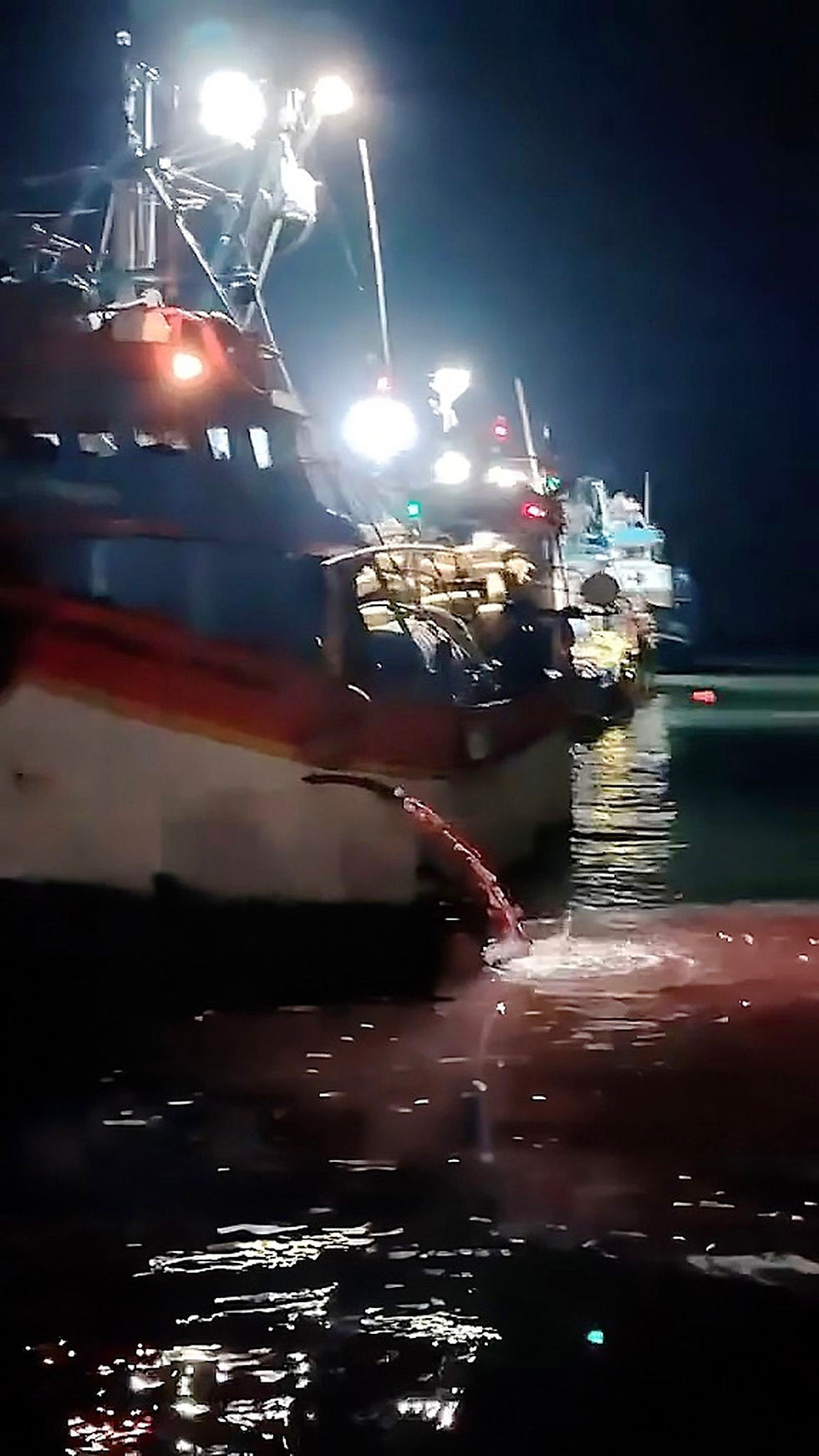
Much of the fish caught in these waters is consumed by one of nine fishmeal plants that dot Senegal’s coast, which cook and pulverize the catch to make the lucrative dark-yellow powder used as feed for chickens, pigs, and especially farm-raised seafood. Senegalese families that for generations depended on fishing are now selling — or repurposing — their boats to flee to Europe. With few prospects at home, many Africans attempt the more than 930-mile sea journey from Senegal to Europe’s nearest touchpoint, Spain’s Canary Islands, a route that claimed more than 3,000 lives in 2025.

From July 2024 to March 2025, reporters with The Outlaw Ocean Project visited three fishmeal plants in Senegal — Omega Fishing, Touba Protein Marine, and St. Louis Sea Production — to interview nearby residents, plant managers, and workers. These interviews revealed a variety of crimes and concerns tied to the factories. (Omega Fishing, Touba Protein Marine, and St. Louis Sea Production did not respond to a request for comment.) Between 2018 and 2024, at least eight fishmeal plants in Senegal were linked to environmental violations, unsustainable fishing practices, and repeated episodes of civil unrest. During that period, the plants were accused of polluting the environment on at least a dozen occasions — sometimes by dumping fish-processing waste onto nearby beaches, other times by releasing smoke that residents said caused respiratory problems.

The fishmeal industry has brought millions of dollars in tax revenue and hundreds of jobs to Senegal while helping grow more seafood to meet burgeoning world demand. And yet, while the fishmeal industry has benefited some people, it has harmed others. The question that separates the two groups is not whether fishmeal and aquaculture have benefits, but for whom. And who pays the hidden costs?
A sweeping five-year investigation by The Outlaw Ocean Project, a news organization in Washington, DC, uncovered a variety of those costs, including the loss of artisanal fishing jobs, chronic chemical exposure, avoidable worker deaths, violent protests typically spurred by the horrid stench from fishmeal factories, and escalating geopolitical tensions as countries compete for scarce sources of protein. The investigation found that these social and environmental impacts exact a price primarily paid by the poorer countries where the feed ingredient is harvested and processed, far from where the resulting luxury seafood is eaten.
In The Gambia and Mauritania, the investigation documented how the industry drives food insecurity as fish that once sustained local communities are increasingly being diverted into fishmeal factories for export. In remote islands in Russia’s far east and in China’s Xinjiang region, the reporting detailed the use of forced labor on ships, at farms, and in factories. In other countries, including India and Peru, this industry was tied to at least 80 incidents of civil unrest, some of them violent, usually in the form of labor strikes and community protests sparked by the water pollution or the stench from factories cooking thousands of tons of decomposing fish.

The investigation mapped roughly the entire global fishmeal industry — including more than 1,400 fishmeal factories across 64 countries — tracing supply chains from fishing vessels to processing plants, feed mills, fish farms, and seafood retailers. The reporting effort involved dozens of journalists from as many countries, visiting factories and farms and boarding fishmeal ships at sea. The goal was to chronicle what economists call this industry’s “externalities” — the hidden and displaced social costs of producing this feed that rarely appear on the balance sheets of the seafood companies that depend on it.
The reporting revealed that the fishmeal industry also contributes to geopolitical tensions. For example, in 2021, a dozen Turkish bottom trawlers fishing illegally in the Aegean Sea tried to ram a Greek research vessel when the scientists began filming their activity. In 2018, riots broke out in Saint-Louis, Senegal, after the Mauritanian Coast Guard shot and killed a fisher during what the Mauritanians said was a cross-border raid by a fishmeal boat. Since the mid-1970s, Morocco has militarily occupied Western Sahara, a presence that more than 10 EU Court of Justice rulings and various UN resolutions have deemed illegal. Still, Moroccan ships routinely fish in Western Saharan waters, turning their illegal catch into fishmeal in Western Saharan plants, then exporting it to farms globally labeled as Moroccan. A violent clash over trucks, many of them carrying this fish and fishmeal out of Western Sahara, led to the collapse of a 29-year ceasefire between the countries in 2020.
The oceans bear an especially heavy and largely invisible burden of the fishmeal and fish oil industry. More than a fifth of wild-caught fish around the world is used for non-human consumption, especially as feed for fish, but also chickens and pigs. The investigation assessed more than 2,400 ships tied to fishmeal production, operating in the waters of at least 30 countries. It found that most of these ships do not fully comply with the Global Charter for Fisheries Transparency, a guide created by leading ocean-focused civil society groups detailing accountability standards for industrial fishing fleets. For example, less than 30 percent of the fleet had publicly available location information, and under 25 percent had a unique vessel identification number, or ship license plate. Such opacity makes the fleet difficult to police.
Scientific studies classified at least half of the species landed by the assessed fishmeal vessels as “overexploited” or worse. Most of the ships in this fleet are purse seiners or trawlers, which deploy vast nets to capture dense schools of fish. Both gear types are associated with high levels of waste, routinely hauling in large volumes of bycatch and non-target species. At least 165 of the ships in the global fishmeal fleet were bottom trawlers, conducting a particularly destructive form of fishing that uses weighted nets that scrape the ocean floor, destroying virtually everything in their paths. The problem of unsustainable fishing is compounded by heavy government subsidies that keep too many vessels operating, accelerating pressure on already stressed fisheries.
“Any accounting of the true impact of aquaculture has to start not with the farm, but with the feed,” said Daniel Pauly, project director of the Sea Around Us initiative at the University of British Columbia. “And that kind of accounting offers a very different picture than the industry offers.”
For most of human history, we ate what ecosystems produced on their own: wild fish, grazing animals, and crops grown for people. Livestock survived largely on grass and agricultural leftovers that humans didn’t eat. Today, we do something different: We grow or catch food that people could eat and feed it to animals instead, especially in industrial livestock and fish farming. These calories are converted before they’re consumed.
This global transformation has rewired the trophic chain, turning farms and oceans into engineered calorie-processing systems. The natural food web, consisting of who eats what and how energy moves from plants to animals to humans, is no longer mainly determined by ecosystems. It’s now shaped by industrial design. Animals have become less like savings accounts that turn waste into food, and more like biological factories fueled by globally traded feed commodities such as soy and fishmeal.
The science of animal feed — combining corn, soy, grains, and ingredients like fishmeal to raise livestock faster, more efficiently, and at a larger scale — has been central to the rise of modern civilization. Techniques of animal husbandry emerged roughly 12,000 years ago in the so-called Fertile Crescent, a region stretching from Mesopotamia to Egypt. Alongside innovations such as irrigation and the plough, the domestication of livestock enabled humans to build stable food systems, settle permanently, and eventually develop cities. As farming shifted from grazing animals on open land to penning them, humans assumed responsibility for providing balanced diets, an early precursor to today’s industrial feed systems.
In her 2021 book The Fishmeal Revolution, Kristin A. Wintersteen traces how the Humboldt Current — a cold, nutrient-rich upwelling system along the Pacific coast of South America — was reimagined as a protein mine. That shift, she argues, turned Peru into a global fishmeal superpower, responsible for roughly a quarter of worldwide production. Fishmeal became a critical input fueling the post-World War II expansion of industrial chicken and hog farming, and later aquaculture, particularly in the United States and northern Europe. The model spread far beyond Peru, reaching the coastline of West Africa — and in the process, further distancing consumers from the ecological and human costs of production.
Beginning in the early 2010s, foreign investment — largely from Chinese and European firms — poured into the region to build fishmeal and fish oil factories geared toward export markets in Europe and Asia. The result was a gold rush for small pelagic fish. By 2019, roughly 50 fishmeal and fish oil plants were operating across Mauritania, Senegal, and The Gambia, according to Greenpeace, collectively consuming an estimated half a million metric tons of fish each year. Over the decade leading up to 2021, the industry expanded tenfold along the West African coast. Senegal alone counted at least nine fishmeal plants in 2024, clustered along the coast near Saint-Louis, Kayar, Dakar, Joal, and Sandiara.


Credits: Marta Colomer/Amnesty International
Aquaculture has existed in rudimentary forms for centuries, and it does have some clear benefits. Fish farming provides millions of people with year-round access to affordable protein. In India, aquaculture is a crucial source of jobs, especially for women. In Bangladesh, fish farming has driven an overall decline in the price of fish, making it more accessible for lower-income households. Even accounting for feed ingredients like soy and fishmeal, as well as transportation to the US, certain farmed fish — such as tilapia and Atlantic salmon — emit less greenhouse gas per pound than beef or pork.
Farming bivalves, such as clams, oysters, scallops, and mussels, is an especially sustainable type of aquaculture, as these species typically do not require feed and use relatively small amounts of land or freshwater. Harvesting them has a very low carbon footprint and produces shells that can function as a form of carbon capture, according to a 2020 paper in Nature Food. As of 2022, roughly a third of global aquaculture did not require external feed inputs.

The feed industry has emphasized that it is decreasing its reliance on fishmeal and fish oil, and especially on the use of whole fish or fish that can be eaten by people. However, as aquaculture overall grows, so too does demand for fishmeal. The total amount of global fishmeal production is predicted to rise by nearly 10 percent, mostly from trimmings, between 2022 and 2032, according to the Food and Agriculture Organization. Asked about sustainability concerns tied to her industry, Véronique Jamin, a spokesperson from the international fishmeal association, the IFFO, said that fish farming is “the most efficient animal protein system.” She added that her organization’s “role is not to advise which markets should use fishmeal and fish oil.” “Sustainability frameworks won’t work if they ignore real-world economics,” she said, and seafood companies have to respond to “what people actually want to buy and eat.”
Efforts to move away from fishmeal and fish oil have struggled. Researchers have identified various potential alternative food sources for carnivorous farmed fish — including seaweed, cassava waste, soldier fly larvae, single-cell proteins produced by fungi and bacteria, and even sewage. None are being produced affordably at scale, however. The alternatives often lack the full range of nutrients that support the growth of farmed fish, especially omega-3. Certain “green” options, like insect meal, are expensive, and as a result, there has been limited interest among feed companies to pay a premium for them.
As commodities, fishmeal and fish oil promise to grow in international importance. Starting in 2022, more than half of the seafood eaten globally came from fish farms rather than wild catch. Aquaculture is a $313-billion industry and the fastest-growing segment of global food production. Most of these fish farms are powered by fishmeal and fish oil.
Fishing ships in South Africa target anchovies almost exclusively to be turned into fishmeal, because the species that swims in the country’s waters is too small and oily for humans to eat, according to a paper published by the trade minister. But animal conservationists say that the industry is taking a crucial food source away from the critically endangered African penguin, putting further pressure on a bird already in drastic decline. The stakes are high when it comes to the local economy, too: One penguin colony in Cape Town brings in about $16 million in tourism revenue every year. Beginning in 2022, scientists went to work trying to convince the South African government to implement a law that would ban fishing within a dozen miles of the country’s largest penguin colonies. Their efforts worked. In January 2024, the government announced a closure of commercial fishing in the waters around the penguin colonies for the next decade. Marine biologist Richard Sherley said the closures would likely slow the decline in the penguins’ population.
Much of the burden of food insecurity, social unrest, and air and water pollution is borne by the poorer countries that produce the fishmeal or fishmeal-fed seafood that South Africa imports. Roughly half of the seafood eaten in the country in 2021 was imported, according to the South African Sustainable Seafood Initiative. Half of all seafood globally is farmed, and most of that is fed fishmeal. The fish farms in several of the countries that export the most seafood to South Africa — including Namibia, Norway, China, New Zealand, and India — have ties to severe problems caused by fishmeal production, according to the investigation.
In India, the reporting found explosions, fires, and worker asphyxiations at factories producing fishmeal that supplies the country’s shrimp farms, as outlined by Bait to Plate, an online tool that tracks the fishing and seafood industries. In 2020, at an Indian factory called United Marine Products, government inspectors discovered that plant operators had dumped wastewater into hidden bore holes, likely contaminating groundwater and making nearby villagers and livestock sick. At another factory called Bismi Aquatic Products in 2021, a migrant worker died while he was cleaning a wastewater tank and passed out from the fumes. Bismi Aquatic Products did not respond to a request for comment.
Most of the salmon eaten in South Africa, typically sold in the form of sushi served at restaurants, comes from Norwegian aquaculture farms, which rely heavily on imported fish feed made from wild-caught fish. The feed given to this salmon is linked to a range of documented impacts, including food insecurity in Western Africa, pollution from waste and chemicals, and the spread of parasites and disease to wild fish populations.
As the production of seafood has grown more globalized, its supply chains have stretched longer, and it has become tougher for consumers to know whether it was harvested sustainably or legally. Most grocers who sell seafood are in the dark as well because tracking is difficult and costly. Robert K. Stumberg, professor at Georgetown Law and supply-chain expert, said this is partly because grocers typically buy from wholesalers and rarely track their suppliers. The other reason may be plausible deniability, he added. “Companies can escape blame or the need to fix problems if they’re unaware of them.”
The investigation revealed a surprising diversity of hidden costs in the global feed industry. In Senegal, fishmeal production accelerated overfishing, eroding traditional fishing grounds and contributing to thousands of young men attempting deadly and desperate voyages at sea to Europe. In Russia, fishmeal workers were held captive in secluded company towns in remote parts of the country, or stuck on ships far from shore. “People have nowhere to go, no money,” one worker said in a plea to Vladimir Putin, who participated in an episode of a call-in television show about the fishmeal plant. “Please, help us,” a second worker said. In Chile, several hundred protesters burned tires and blocked coastal highways and railway tracks, demonstrating against the early closure of the fishing season, a move partly driven by overfishing tied to fishmeal.
The investigation also unveiled the hidden role of forced labor and land appropriation in China’s growing aquaculture industry. In 2025, South Africa imported more than $30 million worth of seafood from China, which is rapidly expanding its aquaculture industry and is now raising more than four times the amount of fish it catches. One of the fastest-growing regions in this boom is China’s mountainous and desert inland west, particularly Tibet and Xinjiang, two regions known for intense political repression.
In Tibet, the Chinese government has relocated roughly half a million Tibetans, leveling villages and monasteries for development projects such as hydroelectric dams and fish farms. This effort often uses coercive tactics, including repeated home visits, threats of criminal prosecution, and warnings that utilities could be cut off for those who refused to move, according to a 2024 Human Rights Watch report. In response to these sorts of policies, at least 169 Tibetans have set themselves on fire, typically on camera, outside police stations, monasteries, or public squares. In Xinjiang, more than a million people have been held in detention camps, and the government has engaged in large-scale land seizures, forced sterilizations, and criminal penalties for speaking native languages or practicing religious and cultural traditions.
The investigation mapped more than 1,000 fish farms in Xinjiang and Tibet that produce an estimated half-billion dollars’ worth of farmed seafood annually, much of which is exported to more than a dozen countries, including the United States and Canada. The United States bans all goods produced “wholly or in part” by workers in Xinjiang or by ethnic minorities from the region on the presumption that they were made with state-sponsored forced labor.
Where government regulators have proven lacking in ensuring that supply chains are free from unsustainable, illegal, or unethical practices, industry-led certification programs have sought to fill the gap. Critics say these programs serve more as a sustainability smokescreen, giving downstream customers a way to avoid looking deeper into their supply chains. The programs generally focus on environmental crimes, while mostly overlooking labor abuses on ships.
Allie Brudney, a senior staff attorney at the strategic litigation non-profit group Corporate Accountability Lab, said that on land — at processing plants or farms — certification programs rarely conduct true spot checks to authenticate the reassurances given by managers at the factories. Instead, the programs frequently alert companies before inspectors show up, which gives them a chance to clean up the scene so there are no violations. At sea, these programs also often rely on self-reported information from ship captains rather than having auditors directly visit and check conditions offshore on vessels, where crimes are most common.
Devan Meserve, a spokesperson for the Global Seafood Alliance, which runs a program called Best Aquaculture Practices, said that her organization represents the “most comprehensive program for farmed seafood,” partly because it covers the “entire aquaculture production chain.” Protecting workers on the fishing vessels that supply feed mills is, however, an “immense challenge,” she noted, because audits occur strictly at port and do not witness harvest conditions. Meserve added that her organization helps the industry counter illegal and overfishing by requiring feed mills to source most of the fish they use in fishmeal or fish oil from fisheries accredited by certification programs like MarinTrust and Marine Stewardship Council.
Partly bolstered by these certification programs, seafood companies routinely make marketing claims about the ethics and sustainability of their seafood. Often, these claims fail to reckon with crimes or social concerns further up their supply chains, including on the ships or plants that produce the feed for the fish farms. This disconnect is creating growing legal risk for seafood companies and grocers. Since 2020, at least nine lawsuits alleging false advertising have been brought against six seafood companies across six US jurisdictions. The legal complaints focused on a common pattern: marketing claims that portrayed products as sustainable or ethically sourced, paired with supply-chain evidence that suggested otherwise. Plaintiffs challenged language such as “sustainable,” “eco-friendly,” “all-natural,” “wild-caught,” and “from the coast of Maine,” as well as claims of superior worker-safety standards.
In at least four cases, the use of fishmeal or fish oil and their link to industrial fishing and ecosystem depletion were central to arguments that the products were not environmentally sustainable. Additional allegations included forced labor on fishing vessels and reliance on harmful pesticides and antibiotics. During this same period, seafood companies have paid more than $2 million in settlement fees to resolve false-advertising cases. The Outlaw Ocean Project investigation assessed more than 800 seafood companies that made marketing claims comparable to — or stronger than — those cited in the lawsuits and found that over half of the companies had documented crimes or concerns within their supply chains.
Dana Cleaveley, a research consultant formerly with SeaChoice, a Canadian environmental advocacy organization focused on advancing sustainable seafood practices, said that historically, various industries have been forced to reckon with human rights and environmental crimes hidden within their supply chains. As examples, she cited sweatshop garments, blood diamonds, and fair-trade coffee. The seafood industry, however, lags in terms of this type of accountability. As the world scrambles for protein and leans into aquaculture, this industry will have to catch up, Cleaveley said. That’s likely to happen when more countries impose import controls on seafood tainted with illegalities or unsustainable practices. “That’s when investors will begin to see material — not just reputational — risk, and companies will have to adjust.”
(The reporting for this story was part of a larger investigation conducted by an international team of journalists based at The Outlaw Ocean Project.)


Comments