
𝐄𝐃𝐈𝐓𝐎𝐑𝐈𝐀𝐋: 𝐆𝐮𝐧𝐣𝐮𝐫 𝐇𝐚𝐬 𝐏𝐚𝐢𝐝 𝐭𝐡𝐞 𝐏𝐫𝐢𝐜𝐞. 𝐈𝐭 𝐈𝐬 𝐓𝐢𝐦𝐞 𝐭𝐨 𝐑𝐞𝐚𝐬𝐬𝐞𝐬𝐬 𝐆𝐨𝐥𝐝𝐞𝐧 𝐋𝐞𝐚𝐝’𝐬 𝐏𝐫𝐞𝐬𝐞𝐧𝐜𝐞.

For almost a decade, the people of Gunjur have lived alongside the Golden Lead fishmeal factory. What was initially welcomed as an investment that promised jobs, infrastructure and economic opportunities has instead become one of the most divisive industrial developments in our community’s history.
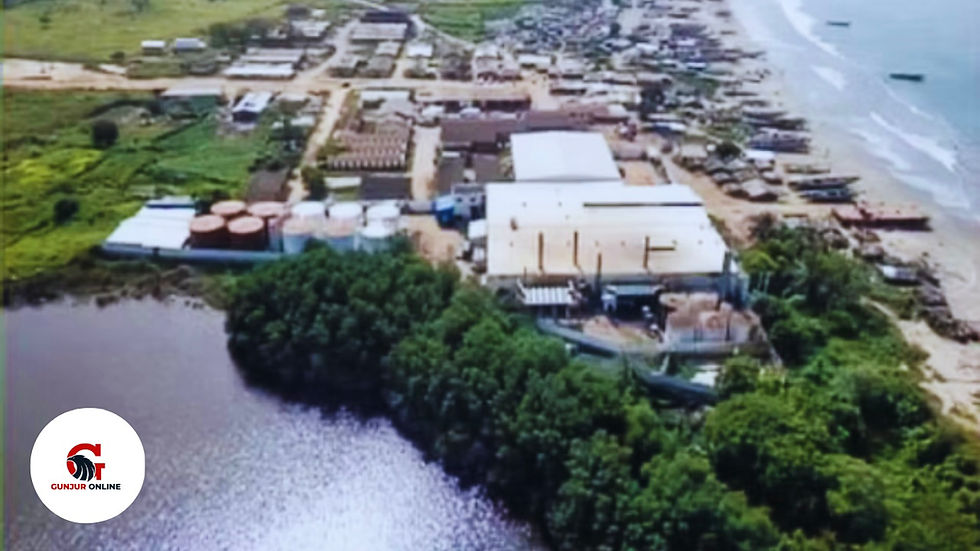
Today, it is fair to ask a simple but important question:
𝐇𝐚𝐬 𝐆𝐮𝐧𝐣𝐮𝐫 𝐫𝐞𝐜𝐞𝐢𝐯𝐞𝐝 𝐚 𝐟𝐚𝐢𝐫 𝐫𝐞𝐭𝐮𝐫𝐧 𝐟𝐨𝐫 𝐭𝐡𝐞 𝐞𝐧𝐯𝐢𝐫𝐨𝐧𝐦𝐞𝐧𝐭𝐚𝐥, 𝐞𝐜𝐨𝐧𝐨𝐦𝐢𝐜 𝐚𝐧𝐝 𝐬𝐨𝐜𝐢𝐚𝐥 𝐜𝐨𝐬𝐭 𝐢𝐭 𝐜𝐨𝐧𝐭𝐢𝐧𝐮𝐞𝐬 𝐭𝐨 𝐛𝐞𝐚𝐫?
𝐓𝐡𝐞 𝐄𝐧𝐯𝐢𝐫𝐨𝐧𝐦𝐞𝐧𝐭 𝐂𝐚𝐧𝐧𝐨𝐭 𝐂𝐨𝐧𝐭𝐢𝐧𝐮𝐞 𝐭𝐨 𝐏𝐚𝐲 𝐭𝐡𝐞 𝐏𝐫𝐢𝐜𝐞
Gunjur is blessed with some of The Gambia’s most valuable natural assets - its Atlantic coastline, protected lagoon, fisheries and biodiversity. These resources are not only beautiful; they sustain livelihoods, tourism and future generations.
Over the years, residents, environmental groups and journalists have repeatedly raised concerns about offensive odours from the factory, reports of pollution affecting the lagoon and coastline, waste disposal practices and damage to marine ecosystems. These concerns have resulted in legal action, public protests and sustained national and international attention.
Whether every allegation has been legally proven is not the point. The consistency of community complaints over many years demonstrates that public confidence has been seriously undermined.
Environmental protection should never be viewed as an obstacle to investment. It is the foundation of sustainable development.
𝐀 𝐏𝐮𝐛𝐥𝐢𝐜 𝐇𝐞𝐚𝐥𝐭𝐡 𝐂𝐨𝐧𝐜𝐞𝐫𝐧
Residents living close to the factory have for years complained about the persistent smell emitted during fishmeal production. Community members and workers have also reported respiratory discomfort, skin irritation and other health concerns associated with factory operations, although establishing direct medical causation requires formal scientific investigation.
The precautionary principle should guide government action. When an industrial operation raises repeated concerns about air quality and environmental contamination, independent monitoring should be continuous, transparent and publicly accessible.
Communities deserve reassurance through evidence, not silence.
𝐓𝐡𝐞 𝐅𝐢𝐬𝐡 𝐓𝐡𝐚𝐭 𝐎𝐧𝐜𝐞 𝐅𝐞𝐝 𝐅𝐚𝐦𝐢𝐥𝐢𝐞𝐬
Fishmeal production depends on enormous quantities of small pelagic fish, including bonga and sardinella.
These are not luxury species.
They are among the most affordable sources of protein for ordinary Gambians.
Every boat or truckload directed into industrial fishmeal production is fish that cannot be sold fresh in local markets or support artisanal fishing livelihoods.
Across West Africa, conservation organisations have warned that expanding fishmeal production places increasing pressure on already vulnerable fish stocks, threatening food security and the livelihoods of coastal communities.
Gunjur’s fishermen should not have to compete with industrial processors for the very resource on which their families depend.
𝐂𝐨𝐫𝐩𝐨𝐫𝐚𝐭𝐞 𝐒𝐨𝐜𝐢𝐚𝐥 𝐑𝐞𝐬𝐩𝐨𝐧𝐬𝐢𝐛𝐢𝐥𝐢𝐭𝐲 𝐌𝐮𝐬𝐭 𝐌𝐞𝐚𝐧 𝐌𝐨𝐫𝐞 𝐓𝐡𝐚𝐧 𝐒𝐲𝐦𝐛𝐨𝐥𝐢𝐜 𝐃𝐨𝐧𝐚𝐭𝐢𝐨𝐧𝐬
Responsible companies recognise that profitability comes with obligations to host communities.
When Golden Lead began operations, expectations included improved infrastructure, meaningful employment, a fish market, and long-term community development initiatives.
Ten years later, many residents believe those expectations remain largely unmet.
According to the Gunjur Village Development Committee’s 2025/26 financial report, the community received D450,000 from Golden Lead during the year, an amount that has generated considerable debate regarding whether it reflects the scale of the company’s operations and its impact on the community.
𝐂𝐨𝐫𝐩𝐨𝐫𝐚𝐭𝐞 𝐒𝐨𝐜𝐢𝐚𝐥 𝐑𝐞𝐬𝐩𝐨𝐧𝐬𝐢𝐛𝐢𝐥𝐢𝐭𝐲 𝐬𝐡𝐨𝐮𝐥𝐝 𝐧𝐨𝐭 𝐛𝐞 𝐦𝐞𝐚𝐬𝐮𝐫𝐞𝐝 𝐛𝐲 𝐨𝐜𝐜𝐚𝐬𝐢𝐨𝐧𝐚𝐥 𝐝𝐨𝐧𝐚𝐭𝐢𝐨𝐧𝐬.
It should be reflected in lasting investments such as:
Modern health facilities.
Educational scholarships.
Skills training for young people.
Sustainable fisheries programmes.
Environmental restoration.
Reliable water and sanitation projects.
Transparent annual community development agreements.
Communities hosting major industries deserve long-term partnerships, not temporary goodwill.
𝐃𝐞𝐯𝐞𝐥𝐨𝐩𝐦𝐞𝐧𝐭 𝐌𝐮𝐬𝐭 𝐁𝐞𝐧𝐞𝐟𝐢𝐭 𝐋𝐨𝐜𝐚𝐥 𝐏𝐞𝐨𝐩𝐥𝐞
No one is suggesting that investment is bad.
The Gambia needs investors.
The country needs industries.
The country needs jobs.
But investment should never come at the expense of clean air, healthy ecosystems, sustainable fisheries or the dignity of local communities.
Economic development and environmental protection are not opposing goals, they are complementary.
When one is sacrificed for the other, everyone loses.
𝐓𝐢𝐦𝐞 𝐟𝐨𝐫 𝐆𝐨𝐯𝐞𝐫𝐧𝐦𝐞𝐧𝐭 𝐀𝐜𝐭𝐢𝐨𝐧
The time has come for the Government of The Gambia, the National Environment Agency, the Ministry of Fisheries and all relevant regulators to undertake a comprehensive and transparent review of fishmeal factory operations in Gunjur and elsewhere.
That review should include:
Independent environmental audits.
Regular public water and air quality monitoring.
Sustainable fish stock assessments.
Stronger enforcement of environmental regulations.
Transparent Corporate Social Responsibility commitments.
Meaningful consultation with affected communities.
The people of Gunjur deserve to know that their health, environment and future are valued as highly as foreign investment.
𝐎𝐮𝐫 𝐏𝐨𝐬𝐢𝐭𝐢𝐨𝐧
This editorial is not an argument against investment.
It is an argument for responsible investment.
It is a call for accountability.
It is a call for environmental justice.
It is a call for sustainable fisheries.
And above all, it is a call to ensure that no community is forced to sacrifice its natural heritage for promises that fail to materialise.
Gunjur has given much.
It is time that Gunjur receives the protection, respect and partnership it deserves.


Comments